
How AI Call Routing Works and Why It Cuts Wait Times
Every business that takes inbound calls has the same problem. Some callers reach the wrong person, get transferred two or three times, and hang up frustrated. Others wait in a queue while the agent they need is sitting idle because the system does not know how to match them.
AI call routing solves this. It is one of the most practical upgrades you can make to a business phone system, and if you are already running an AI voice agent, routing is what makes the whole system work together intelligently.
What Is Call Routing?
Call routing is the process of deciding where an inbound call goes after it is answered. In a simple setup, routing might just mean forwarding all calls to one number. In a more sophisticated setup, it means analyzing the call and sending it to the right agent, team, or automated flow based on a set of rules.
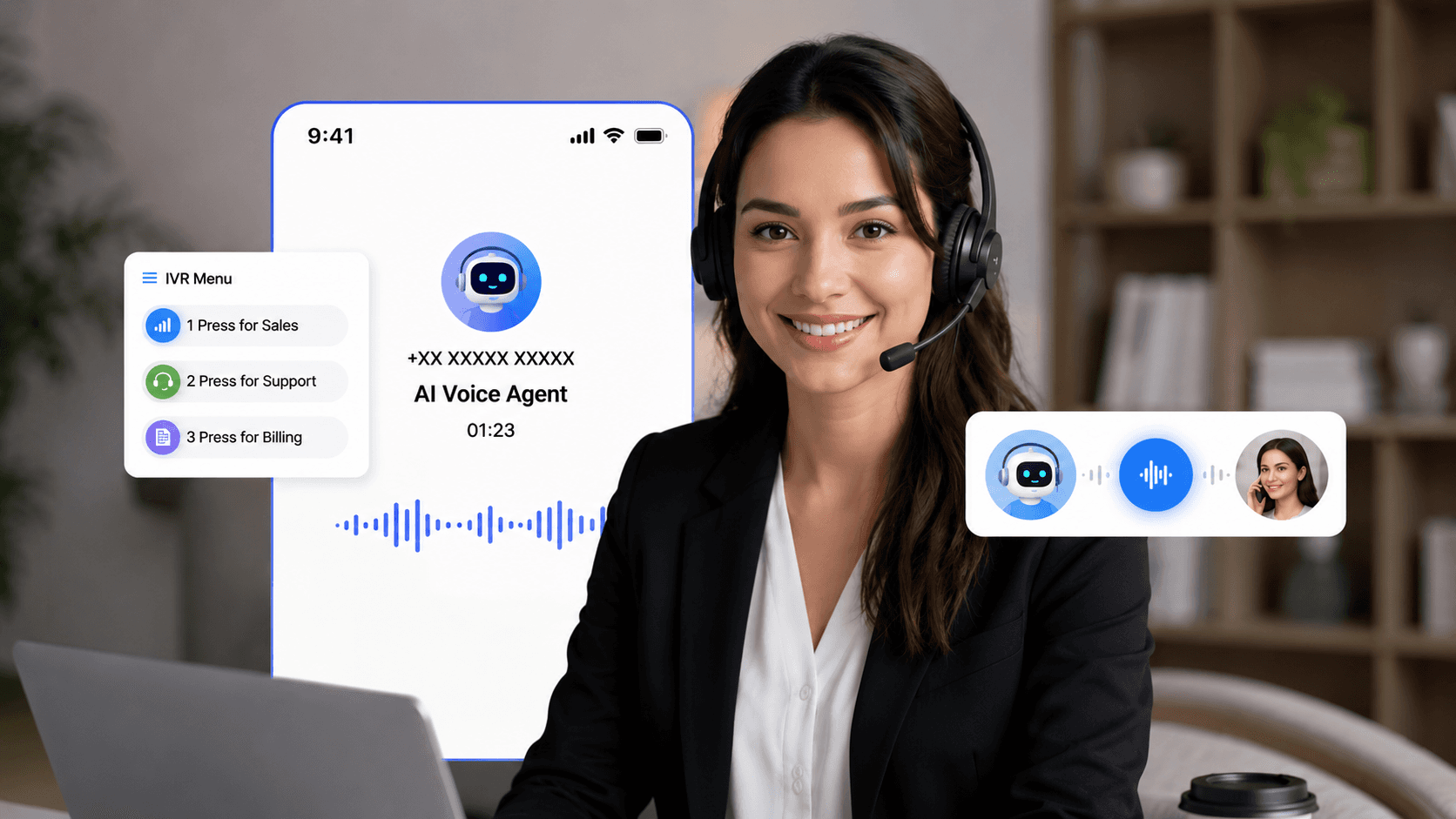
Traditional routing uses fixed rules. If the caller presses 1, send to sales. If they press 2, send to support. It works at a basic level but it is rigid and it puts the burden on the caller to know which option they need.
AI routing replaces fixed rules with intelligent decision-making in real time.
How AI Call Routing Actually Works
When a call comes in, AI routing analyzes several signals simultaneously before deciding where to send it:
Caller identity. If the phone number matches a record in your CRM, the system knows who is calling before anyone picks up. It knows their history, their account status, whether they have an open support ticket, and how long they have been a customer.
Intent detection. Using speech recognition and natural language processing, the system understands what the caller needs from the first few words they say. Not from a menu selection but from natural language.
Agent availability and skills. The system knows which agents are available right now, what each agent specializes in, and what their recent performance looks like on similar calls.
Queue conditions. It sees current wait times across all queues and can make real-time decisions about where to send overflow calls.
Priority rules. High-value customers, urgent issues, or callers who have already been waiting can be flagged for priority handling.
All of these signals feed into a routing decision that happens in under a second.
Why This Cuts Wait Times
The reduction in wait times comes from a few different mechanisms working together.
Fewer wrong transfers. Every time a call gets transferred, that is time wasted for the caller and the agent. AI routing eliminates most wrong transfers because the system sends calls to the right place the first time.
Better queue distribution. Traditional routing often creates uneven queues where one agent is overwhelmed while another is idle. AI routing distributes calls based on real-time availability, not just which queue a call type is assigned to.
Faster intent resolution. When an agent receives a call, they already know who is calling and why. They do not spend the first two minutes asking for account information and understanding the issue. They start solving it immediately.
Automated resolution for common requests. Calls that do not need a human at all get handled by the AI layer before they ever enter a queue. This keeps the queue shorter for calls that genuinely need human attention.
Skill-Based Routing
One of the most useful features in AI routing is skill-based routing. Instead of routing by department, you route by individual agent capability.
For example, say your support team has five agents. Two are specialists in billing issues, two handle technical problems, and one handles everything. Skill-based routing sends billing calls to the billing specialists and technical calls to the technical specialists. The generalist handles overflow.
The result is faster resolution because callers reach someone with the right knowledge immediately, not just whoever happens to be available.
Over time, AI routing learns from outcomes. If calls routed to a specific agent for a specific issue type are consistently resolved faster, the system weights that agent more heavily for those call types going forward.
Time-Based and Location-Based Routing
AI routing also handles the logic of when and where your team is available.
Time-based routing automatically adjusts based on business hours. During office hours, calls go to your team. After hours, they go to an AI voice agent, an answering service, or voicemail with a scheduled callback. No manual changes needed when business hours shift.
Location-based routing is useful for businesses with multiple offices or regional teams. Calls from a specific area code or geographic region route to the closest or most relevant team automatically.
What the Data Looks Like Before and After
Businesses that implement AI call routing typically see measurable changes within the first few weeks:
Metric | Before AI Routing | After AI Routing |
|---|---|---|
Average handle time | 8 to 12 minutes | 5 to 7 minutes |
First call resolution rate | 60 to 70 percent | 80 to 90 percent |
Transfer rate | 25 to 35 percent of calls | 5 to 10 percent of calls |
Abandoned calls | 15 to 20 percent | 5 to 8 percent |
The numbers vary by business type and call volume, but the direction is consistent. Fewer transfers, shorter handle times, and more calls resolved on the first attempt.
Setting It Up for a Small Team
For a small business, AI call routing does not require a complex implementation. Most modern VoIP and UCaaS platforms include it as a configurable feature rather than something you build from scratch.
The setup process typically looks like this:
Define your team members and their skill areas
Set your routing priorities and rules
Connect your CRM so the system can identify callers
Configure time-based rules for business hours and after-hours
Set overflow rules for high-volume periods
For a team of 5 to 15 people, this takes a few hours to set up and refine over the first week as you see how calls are actually being distributed.
Is It Worth It for a Small Business?
Yes, especially if your team handles more than 20 to 30 inbound calls per day. At that volume, the time saved on wrong transfers and the improvement in first-call resolution adds up quickly.
For businesses with fewer calls, the value is still there but shows up differently. A cleaner caller experience, a more professional auto attendant, and the ability to handle after-hours calls without missing anything are all worth having even at lower volumes.
The businesses that benefit most are those where misrouted calls are currently a visible problem. If your team frequently forwards calls between people, or if customers regularly complain about being transferred multiple times, AI routing is the fix.
ConneXio Cloud includes AI-powered call routing with skill-based distribution, CRM integration, and real-time queue analytics across all plans.
🗓️
☎️
💬
All-in-one-Solutions!
Dialer, Omni-Channel Tools, CRM, Workforce Management, Real Time Analytics And More...
Comperation
Related Posts
Tips, product updates, and insights to help you get more out of ConneXio Cloud