
AI Voice Agents: The Complete Guide for Business
Your phone rings. A customer wants to reschedule their appointment. Another needs to check their order status. A third has a billing question. Meanwhile, your team is already handling five other calls.
This is the reality for most businesses. Phone calls are essential but expensive to staff, impossible to scale, and frustrating when customers wait on hold. AI voice agents change this equation entirely.
This guide covers everything you need to know about AI voice agents—what they are, how they work, what they can realistically handle, and how to deploy one for your business. If you are evaluating this technology or ready to implement, start here.
What Is an AI Voice Agent?
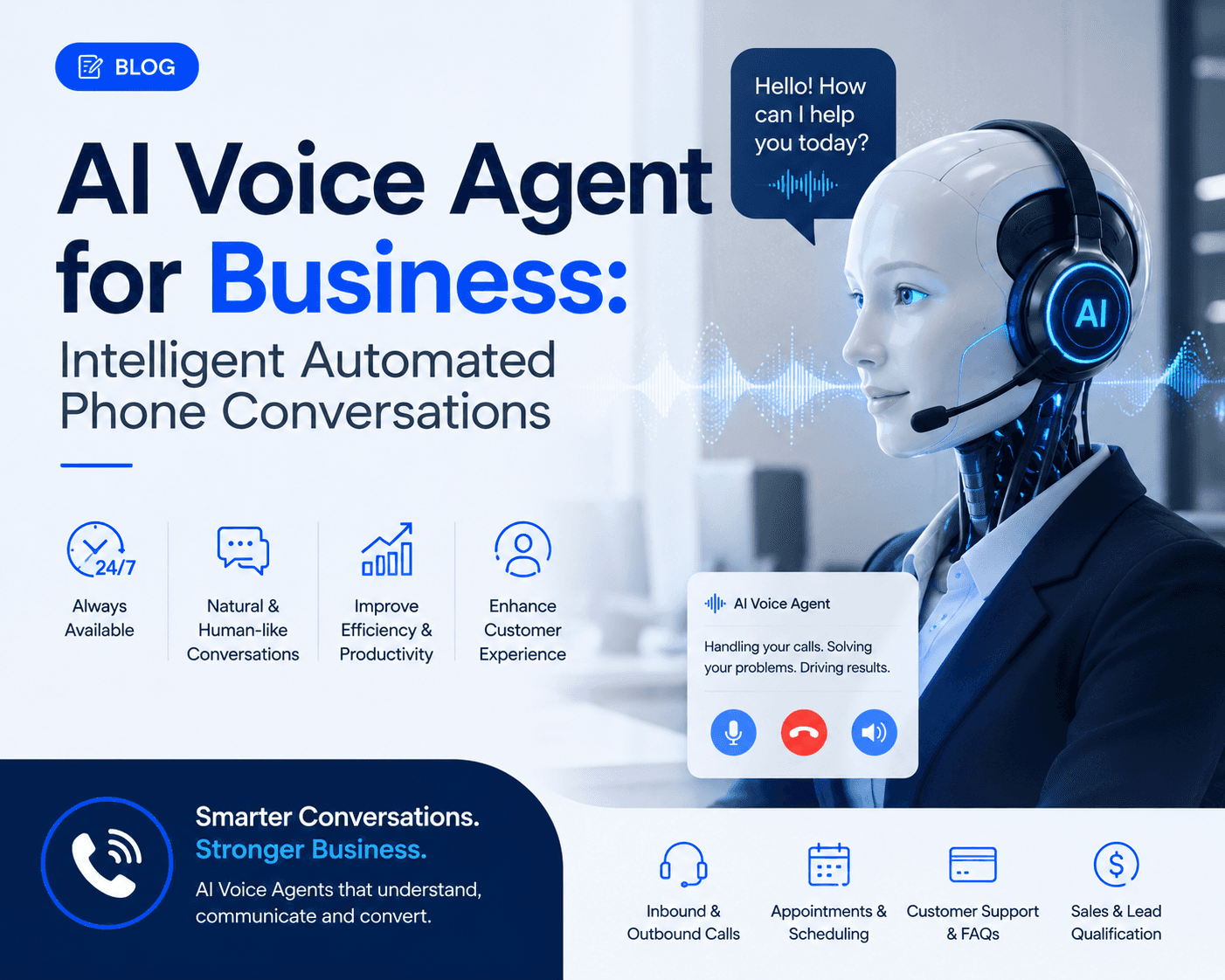
An AI voice agent is software that conducts phone conversations autonomously. It answers calls, understands what callers say, responds naturally, and takes actions—all without human involvement.
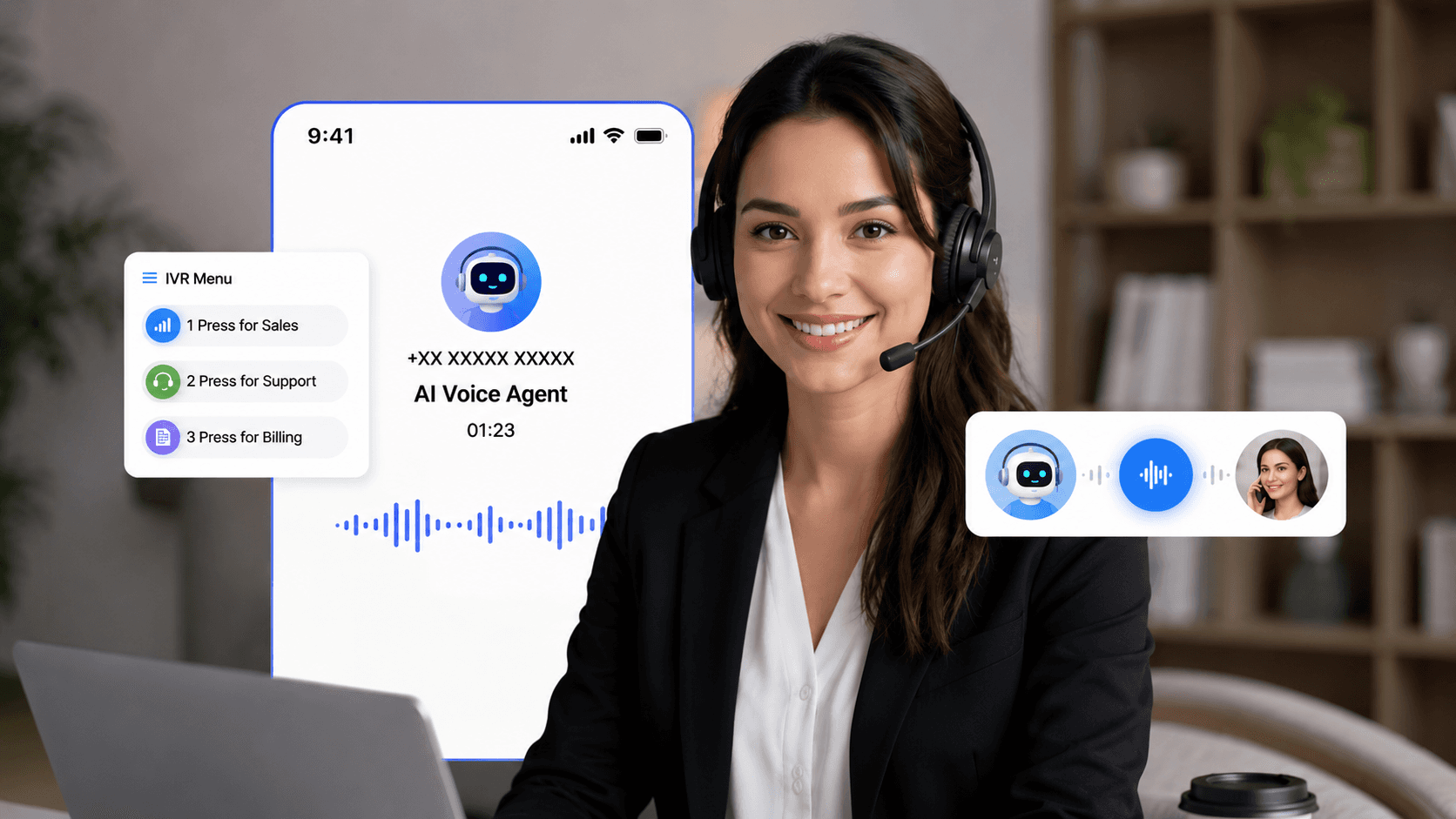
This is not the robotic "press 1 for sales" experience. Modern AI voice agents use large language models similar to ChatGPT, but optimized for real-time voice conversations. They understand context, handle interruptions, remember what was said earlier in the call, and adapt their responses based on the conversation flow.
The key difference from traditional IVR systems:
IVR: Rigid menu trees, keyword matching, limited paths, frustrating dead ends
AI Voice Agent: Natural conversation, intent understanding, flexible responses, task completion
When a customer calls and says "I need to move my appointment from Thursday to sometime next week, preferably morning," an AI voice agent understands this completely. It checks availability, offers options, confirms the change, and sends a confirmation—just like a human would, but instantly and at any hour.
What Can AI Voice Agents Actually Handle?
The honest answer: routine, repeatable tasks that follow predictable patterns. AI voice agents excel at conversations where the goal is clear and the resolution paths are defined.
High success rate (70-90% resolution):
Appointment scheduling and rescheduling
Order status inquiries
Account balance and payment information
FAQ responses
Lead qualification and intake
Booking confirmations and reminders
Basic troubleshooting with defined steps
Call routing based on intent
Moderate success rate (50-70% resolution):
Product recommendations with multiple variables
Complaint handling for common issues
Technical support with branching paths
Quote requests requiring calculation
Better suited for humans:
Emotional situations requiring empathy
Complex negotiations
Complaints from high-value customers
Situations requiring judgment calls
Novel problems with no precedent
The pattern is clear: AI handles volume and routine, humans handle complexity and emotion. The best implementations use AI to resolve the 60-80% of calls that are straightforward, freeing human agents for the conversations that actually need them.
How AI Voice Agents Work
Understanding the technology helps set realistic expectations. Here is what happens during an AI voice agent call:
1. Speech Recognition (ASR)
The caller's voice is converted to text in real-time. Modern ASR handles accents, background noise, and natural speech patterns with 95%+ accuracy in good conditions.
2. Intent Understanding (NLU)
The AI analyzes what the caller actually wants. "I need to change my appointment" and "Can we reschedule?" and "Thursday doesn't work anymore" all map to the same intent: reschedule appointment.
3. Context Management
The AI maintains conversation context. If a caller says "Make it 2pm instead," the AI knows "it" refers to the appointment discussed earlier, not a random request.
4. Response Generation
Based on intent and context, the AI generates an appropriate response. This is where large language models shine—producing natural, contextually appropriate language rather than canned scripts.
5. Action Execution
The AI connects to your business systems to actually do things: check calendars, update databases, process transactions, send confirmations. This is what separates useful AI from impressive demos.
6. Speech Synthesis (TTS)
The response is converted back to natural-sounding speech. Today's TTS is remarkably human—appropriate pacing, natural intonation, even emotional tone matching.
This entire loop happens in milliseconds, enabling natural conversational flow without awkward pauses.
Integration: Where the Real Value Lives
An AI voice agent that cannot access your systems is just an expensive answering machine. The value comes from integration.
Essential integrations:
Calendar/Scheduling: Check availability, book appointments, send invites
CRM: Pull customer history, update records, log interactions
Order Management: Check status, modify orders, process returns
Knowledge Base: Access FAQs, product info, policies
Ticketing: Create tickets, check status, escalate issues
The integration depth determines what the AI can actually accomplish. Surface-level integration means the AI can look things up. Deep integration means it can take action.
For example, a shallow integration might let the AI say "Your order shipped yesterday." A deep integration lets the AI say "Your order shipped yesterday via FedEx, tracking number 123456, expected delivery Thursday. Would you like me to text you the tracking link?"
If you are evaluating AI voice agent platforms, integration capabilities should be your primary filter. The conversational AI is largely commoditized—the differentiation is in what the AI can actually do. Ready to see deep integration in action? Explore our AI voice agent platform with 100+ native integrations.
Deployment: What to Expect
Realistic timelines for AI voice agent deployment:
Simple use case (2-4 weeks):
Single purpose like appointment scheduling or FAQ handling. Limited integrations. Using pre-built conversation templates.
Standard deployment (4-8 weeks):
Multiple use cases. CRM and calendar integration. Custom conversation flows. Testing and refinement period.
Complex enterprise (8-12+ weeks):
Multiple departments or locations. Deep integration with legacy systems. Compliance requirements. Custom voice and personality development.
The timeline is heavily influenced by your integration complexity and how well-documented your current processes are. If you cannot clearly explain how a human handles a call type, AI will struggle too.
Costs and ROI
AI voice agent pricing typically follows one of these models:
Per-minute: $0.05-0.15 per minute of AI handling
Per-call: $0.50-2.00 per completed call
Per-seat replacement: Monthly fee based on call volume handled
Compare this to human agent costs:
Fully loaded cost per agent: $3,500-6,000/month
Average calls handled per agent per day: 40-60
Effective cost per call: $3-7
The math usually works if AI can handle at least 50% of your call volume. At 70%+ resolution rates, the ROI is substantial.
But cost savings are only part of the equation. Also consider:
24/7 availability without night shift premiums
Zero hold time improving customer satisfaction
Instant scalability during volume spikes
Consistency in every interaction
Human agents freed for complex, high-value work
Common Mistakes to Avoid
Trying to automate everything at once.
Start with one or two high-volume, straightforward use cases. Perfect those before expanding. Appointment scheduling and order status are common starting points because they are high volume and predictable.
Underinvesting in conversation design.
The AI is only as good as the conversations it is trained on. Spend time mapping out real call flows, edge cases, and escalation paths. Listen to actual calls to understand how customers really talk.
Ignoring the handoff to humans.
When AI cannot resolve an issue, the transition to a human agent matters enormously. Poor handoffs—making customers repeat themselves, losing context—destroy the customer experience. Design the escalation path as carefully as the AI conversations.
Setting wrong expectations internally.
AI voice agents are not magic. They will make mistakes. They will fail on edge cases. Communicate realistic expectations to stakeholders: start with 60% resolution as a goal, not 95%.
Forgetting to measure and iterate.
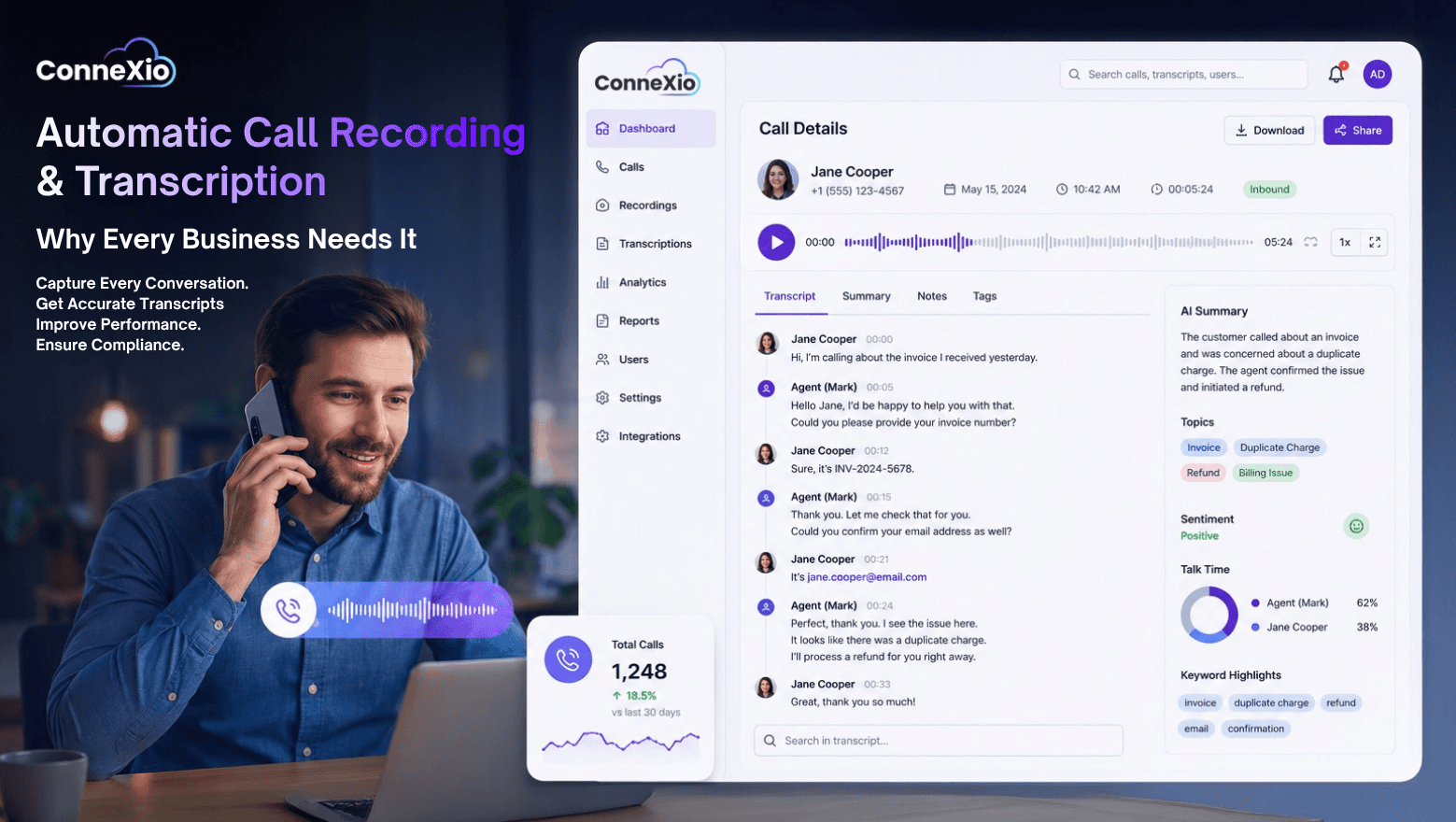
Deploy analytics from day one. Track resolution rates, escalation reasons, customer satisfaction, and call patterns. Use this data to continuously improve. The best AI voice agents get better every month.
Will Callers Know It Is AI?
The honest answer: sometimes yes, sometimes no, and it matters less than you think.
Modern AI voice agents are remarkably natural. Many callers do not realize they are speaking with AI, especially for transactional calls. The technology has moved past the "robot voice" era.
That said, we recommend transparent disclosure for several reasons:
It is legally required in some jurisdictions
It builds trust with customers
It sets appropriate expectations
Interestingly, research shows most customers actually prefer AI for routine matters. No hold time, instant resolution, available 24/7. The frustration with phone support is not talking to AI—it is waiting, repeating information, and not getting resolution. AI that solves the problem quickly is better than a human who puts you on hold.
Getting Started
If you are considering AI voice agents for your business, here is a practical starting path:
Audit your call volume. What types of calls do you receive? What percentage is routine vs. complex?
Identify the best starting point. Look for high-volume, low-complexity call types with clear resolution paths.
Map your integrations. What systems would AI need to access? How accessible are those systems via API?
Document the ideal conversation. How should a perfect call flow work? What questions should be asked? What actions should be taken?
Evaluate platforms. Focus on integration depth, conversation quality, and analytics capabilities.
Start small and iterate. Launch with limited scope, measure results, and expand based on data.
AI voice agents represent a fundamental shift in how businesses handle phone communication. The technology is ready. The question is whether your processes and expectations are aligned for successful implementation.
ConneXio Cloud offers AI voice agents that integrate deeply with your business systems. Natural conversations, autonomous task completion, and 24/7 availability—deployed in weeks, not months. See how AI voice agents can transform your phone operations →

🗓️
☎️
💬
All-in-one-Solutions!
Dialer, Omni-Channel Tools, CRM, Workforce Management, Real Time Analytics And More...
Comperation
Related Posts
Tips, product updates, and insights to help you get more out of ConneXio Cloud