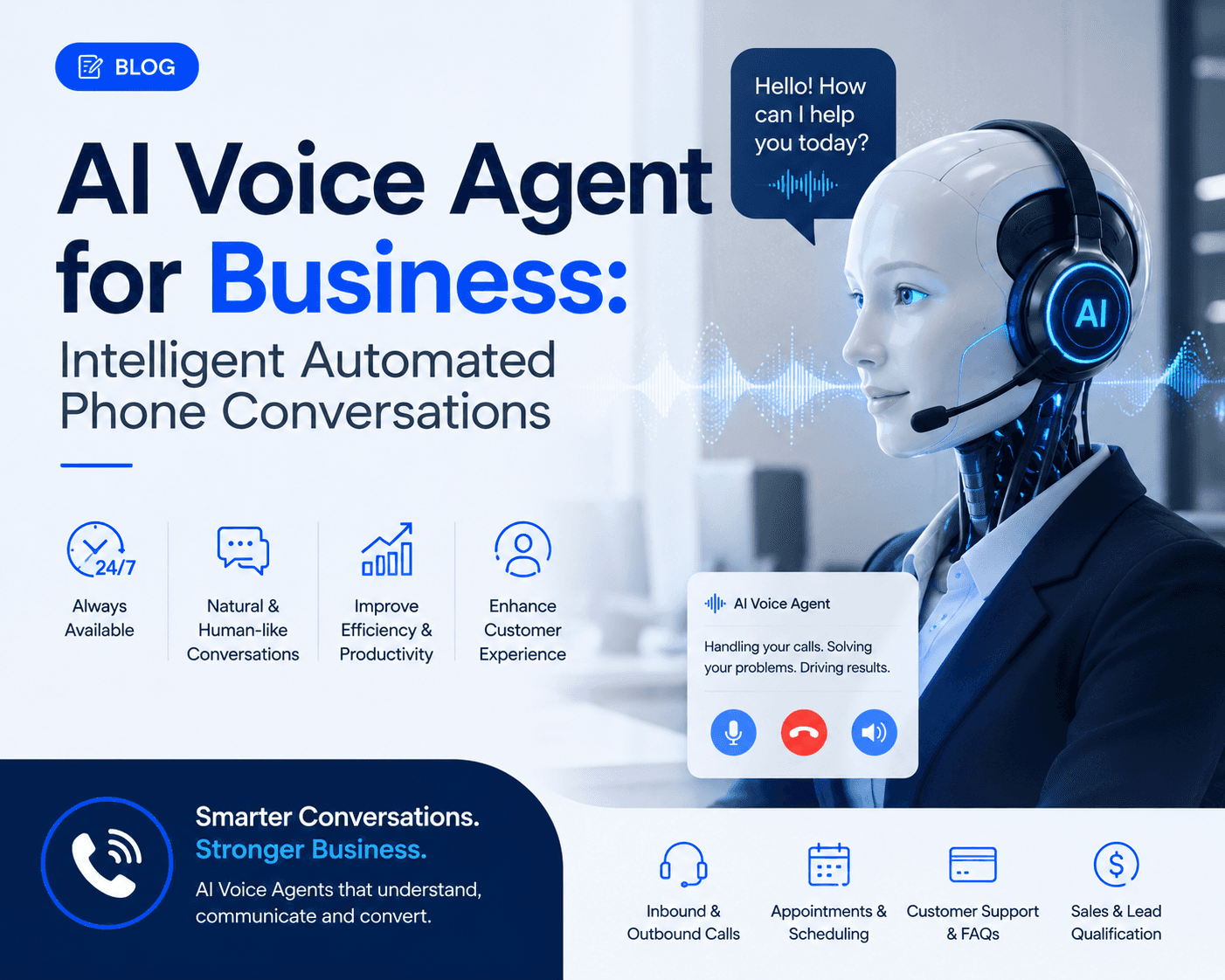
AI Voice Agent for Business: Intelligent Automated Phone Conversations
Not long ago, automating a phone call meant a robotic voice reading from a script and a caller mashing zero to escape. That era is over. AI voice agents today can hold a real back-and-forth conversation, understand context, handle unexpected questions, and resolve issues without ever involving a human agent.
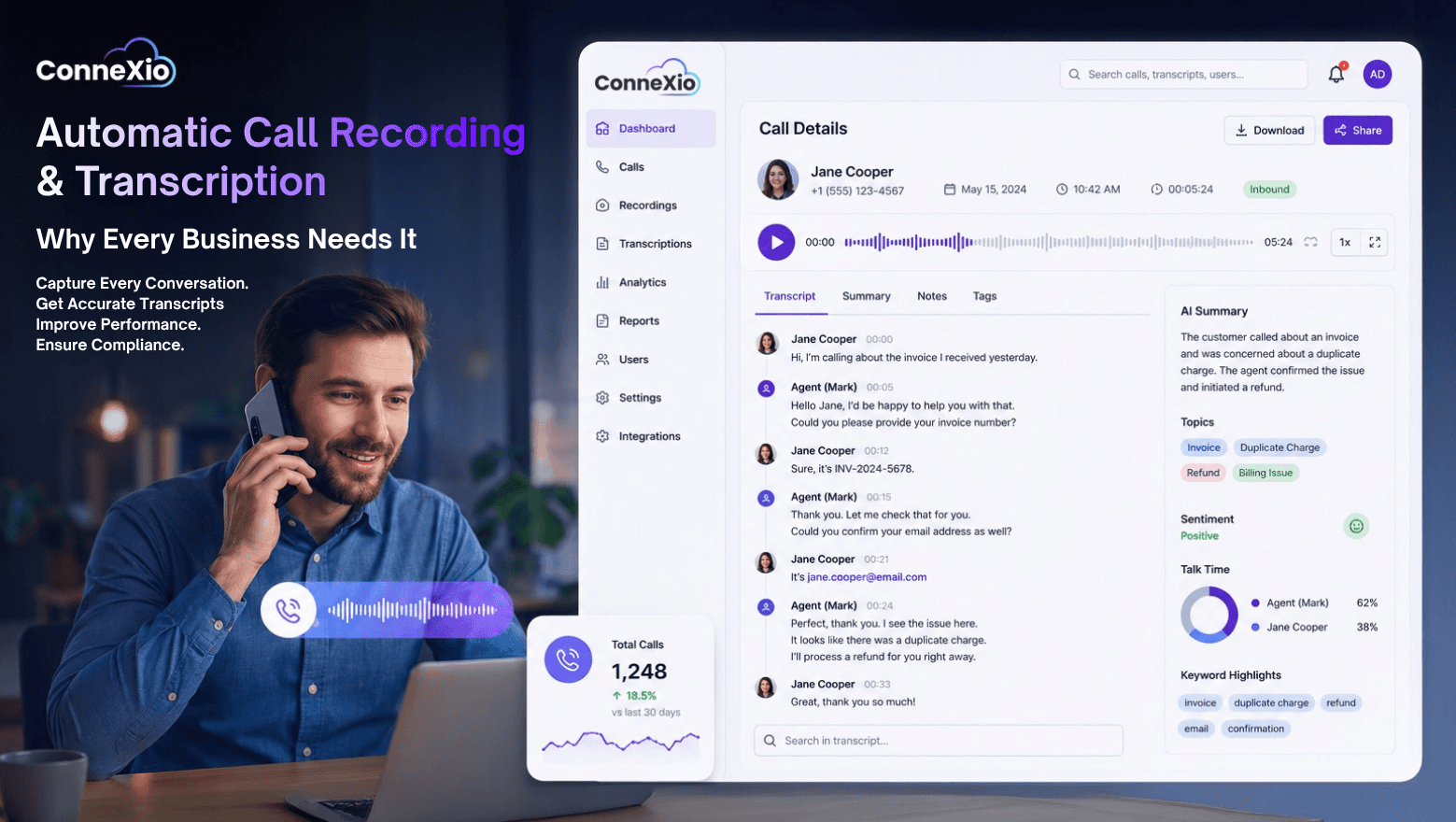
If you have been building out your business phone infrastructure and already have call recording and transcription running, an AI voice agent is the logical next layer.
What Is an AI Voice Agent?
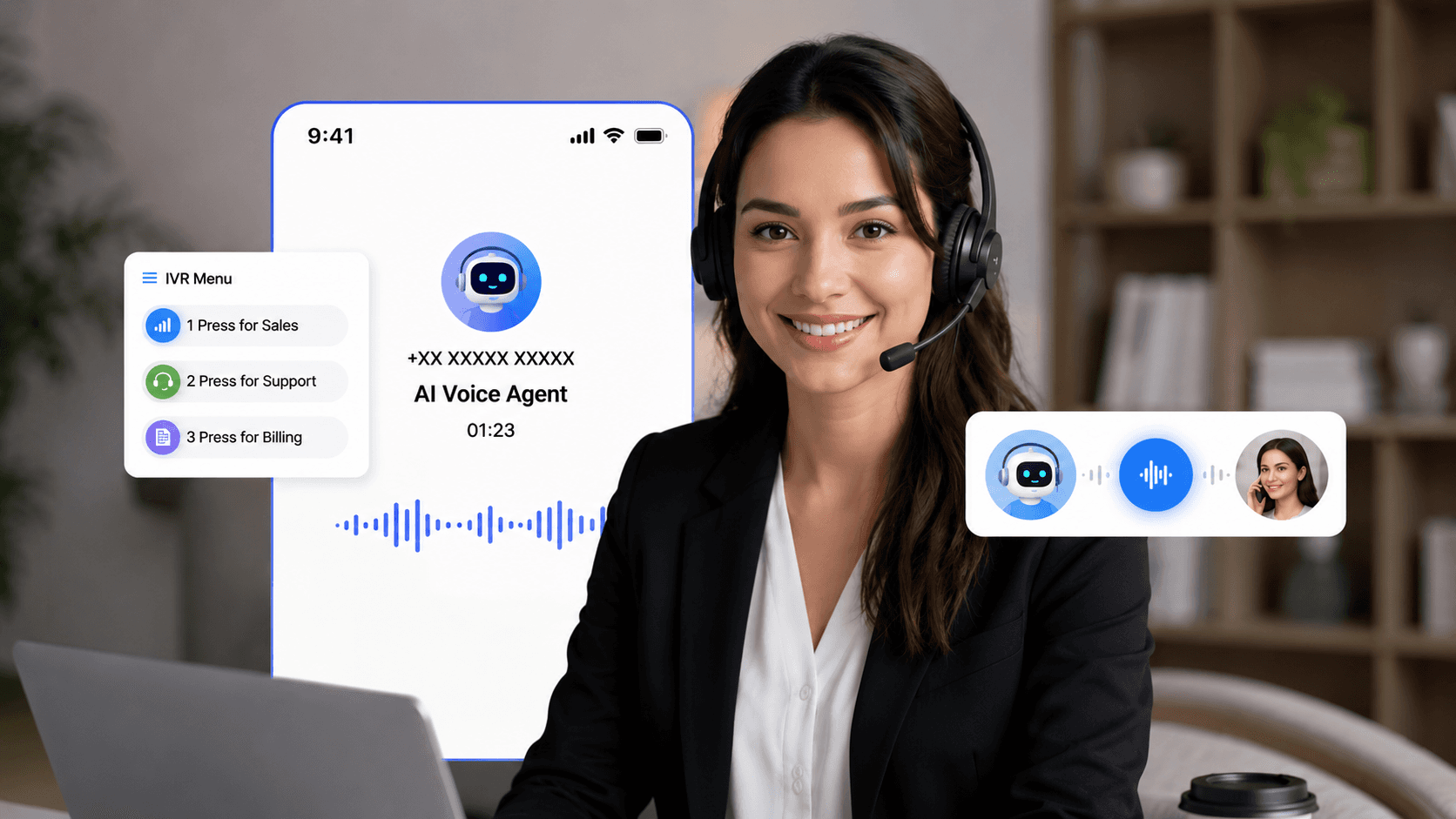
An AI voice agent is software that handles phone calls autonomously using conversational AI. It listens to what the caller says, understands the meaning behind it, responds in natural spoken language, and takes action based on the conversation.
Unlike a traditional IVR that follows a fixed script, an AI voice agent adapts in real time. If the caller goes off script, asks a follow-up question, or changes their mind mid-call, the agent handles it without breaking down.
Think of it as a virtual employee that is available 24 hours a day, handles unlimited simultaneous calls, never has a bad day, and escalates to a human the moment the situation requires it.
How Is This Different from a Chatbot?
Chatbots handle text. AI voice agents handle spoken conversation in real time. The technical challenges are different because voice requires speech recognition, natural language understanding, and speech synthesis all working together with low latency. A half-second delay in a text chat is fine. A half-second delay in a phone conversation feels unnatural.
Modern AI voice agents are built on large language models combined with real-time speech processing. The result is a phone conversation that feels fluid and responsive rather than robotic and rigid.
What Can an AI Voice Agent Actually Handle?
The use cases fall into two broad categories: inbound and outbound.
Inbound use cases:
Answering common customer questions around the clock
Booking, rescheduling, or canceling appointments
Checking order status or account information
Processing simple requests like address changes or subscription updates
Qualifying leads before passing to a sales rep
Collecting information and triaging support tickets
Handling after-hours calls so nothing falls through
Outbound use cases:
Appointment reminders and confirmations
Payment reminders and collections
Customer satisfaction surveys after a service interaction
Lead follow-up calls after a form submission
Re-engagement campaigns for inactive customers
Delivery notifications and status updates
The common thread is that these are conversations with a predictable structure. The caller or recipient has a specific need, the AI handles it, and a human only gets involved when something genuinely requires judgment or empathy.
How Does It Work Under the Hood?
A modern AI voice agent combines several components:
Speech-to-text converts the caller's voice into text in real time, typically with under 300 milliseconds of latency.
Large language model processes the text, understands context and intent, and generates an appropriate response.
Text-to-speech converts the response back into natural-sounding audio. Modern TTS engines sound genuinely human, not robotic.
Business logic and integrations connect the conversation to your actual systems. The agent can look up a customer record, check an order status, update a database, or send a confirmation email during the call.
Escalation handling detects when the conversation has moved beyond what the agent can handle and transfers to a human with full context from the conversation so far.
All of this runs in real time, which is what makes it feel like a real conversation rather than a slow automated system.
The Business Case: What Does This Actually Save?
For small and mid-sized businesses, the math is straightforward.
Scenario | Human Agent Cost | AI Voice Agent Cost |
|---|---|---|
500 inbound calls per month | $3,000 to $5,000/mo (staff time) | $200 to $500/mo |
After-hours coverage | Overtime or answering service | Included, 24/7 |
Outbound reminder calls | 2 to 3 hours of staff time daily | Automated, zero staff time |
Scaling from 500 to 2,000 calls | Hire 2 to 3 more people | No additional cost |
The cost advantage compounds as volume grows. A human agent handles one call at a time. An AI voice agent handles hundreds simultaneously.
Where AI Voice Agents Still Fall Short
Being honest about the limitations matters.
Complex emotional situations. When a caller is upset, grieving, or dealing with something sensitive, human empathy is irreplaceable. A well-built AI agent recognizes these moments and escalates quickly, but it should not try to handle them.
Highly technical conversations. If a caller needs deep technical troubleshooting that requires judgment and diagnosis, a human specialist handles it better.
Heavy accents or poor audio quality. Speech recognition accuracy drops in difficult audio conditions. Most platforms handle common accents well but edge cases still exist.
Callers who simply want a human. Some customers refuse to engage with automation. A good implementation always gives them a clear path to a real person.
The goal is not to replace every human interaction. It is to handle the 70 to 80 percent of calls that follow a predictable pattern so your human team can focus on the 20 to 30 percent that actually benefit from their involvement.
What to Look for When Choosing an AI Voice Agent Platform
The market has expanded quickly and quality varies significantly. Here is what matters:
Voice quality. Listen to demo calls. If the voice sounds robotic or the pacing feels off, your customers will notice.
Latency. Response delay kills the conversation feel. Look for platforms that demonstrate sub-400ms response times.
Integration depth. The agent needs to connect to your CRM, booking system, or whatever data source it needs to do its job. Check the integration list carefully.
Customization. You should be able to define the agent's persona, set its boundaries, and update its knowledge base without engineering support.
Escalation quality. How the agent hands off to a human is as important as how it handles calls itself. The human agent should receive full context, not start from scratch.
Analytics. You need visibility into call outcomes, resolution rates, escalation triggers, and what topics callers are raising. This data improves the agent over time.
Getting Started
For most businesses, the right starting point is a focused use case rather than trying to automate everything at once. Pick one high-volume, predictable call type, such as appointment reminders or FAQ handling, and build from there.
Once you see the results on that first use case, expanding to additional workflows becomes straightforward. The businesses that struggle with AI voice agents are usually the ones that tried to automate too much too fast and did not define clear escalation paths.
Start narrow, measure carefully, and expand from there.
ConneXio Cloud includes AI voice agent capabilities as part of its unified communications platform. Inbound and outbound automation, CRM integration, and seamless human escalation are all built in.
🗓️
☎️
💬
All-in-one-Solutions!
Dialer, Omni-Channel Tools, CRM, Workforce Management, Real Time Analytics And More...
Comperation
Related Posts
Tips, product updates, and insights to help you get more out of ConneXio Cloud