
What Is VoIP? A Plain English Guide for Small Businesses in 2026
If you have ever wondered why your phone bill keeps climbing while the service stays the same, you are not alone. Most small businesses are still paying for phone infrastructure that was built decades ago. VoIP changes that completely.
This guide covers what VoIP actually is, how it works, and why thousands of small businesses are making the switch right now.
What Does VoIP Mean?
VoIP stands for Voice over Internet Protocol. In plain English, it means making phone calls over the internet instead of a traditional phone line.
When you call someone using VoIP, your voice gets converted into small data packets, sent over the internet, and reassembled on the other end in real time. The person you are calling hears your voice just like a normal call. The difference is entirely in how that call travels.
How Is VoIP Different from a Regular Phone?
Traditional phones use the Public Switched Telephone Network, or PSTN. This is a physical infrastructure of copper wires and switching equipment that has been around since the 1800s. Every minute you talk, you are renting access to that infrastructure.
VoIP uses the internet you are already paying for. There is no separate wire for voice, no physical switchboard, and no per-minute charge tied to physical infrastructure.
Here is a quick comparison:
Traditional Phone | VoIP | |
|---|---|---|
Infrastructure | Copper wire network | Internet connection |
Monthly cost | $50 to $100 per line | $15 to $30 per user |
Setup | Technician required | Self-setup in minutes |
Scalability | Add lines one by one | Add users instantly |
Features | Basic calling | Calls, video, SMS, CRM, AI |
Why Are Small Businesses Moving to VoIP?
The main reason is cost. A traditional business phone line can cost $50 to $100 per month per line, plus setup fees, maintenance contracts, and hardware costs. VoIP plans typically start around $15 to $30 per user per month and include features that would cost extra on a traditional system.
Beyond cost, the features are genuinely useful for small teams:
You get a real business phone number. Customers see a professional number, not your personal cell.
Calls work from anywhere. Your team can take business calls on their laptops or phones whether they are in the office, at home, or on the road.
You can add or remove users in minutes. No waiting for a technician to add a line.
Everything is in the cloud. No physical hardware to maintain or replace.
What Features Come with VoIP?
Modern VoIP systems come with a lot more than just calling. Here is what most small business plans include:
Call forwarding and routing so calls go to the right person every time
Voicemail to email so you get transcripts of messages directly in your inbox
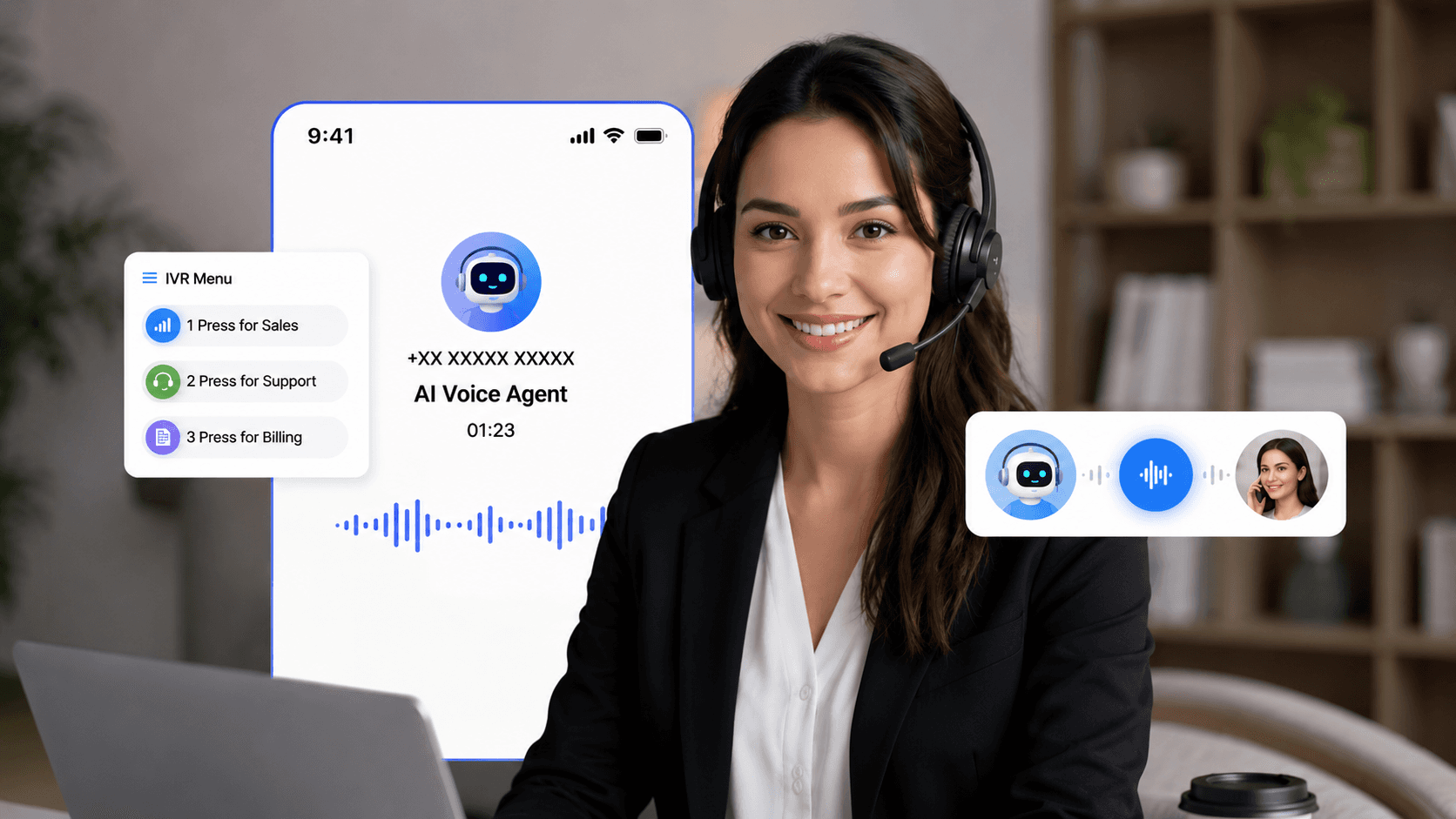
Auto attendant or IVR to greet callers and direct them without needing a receptionist
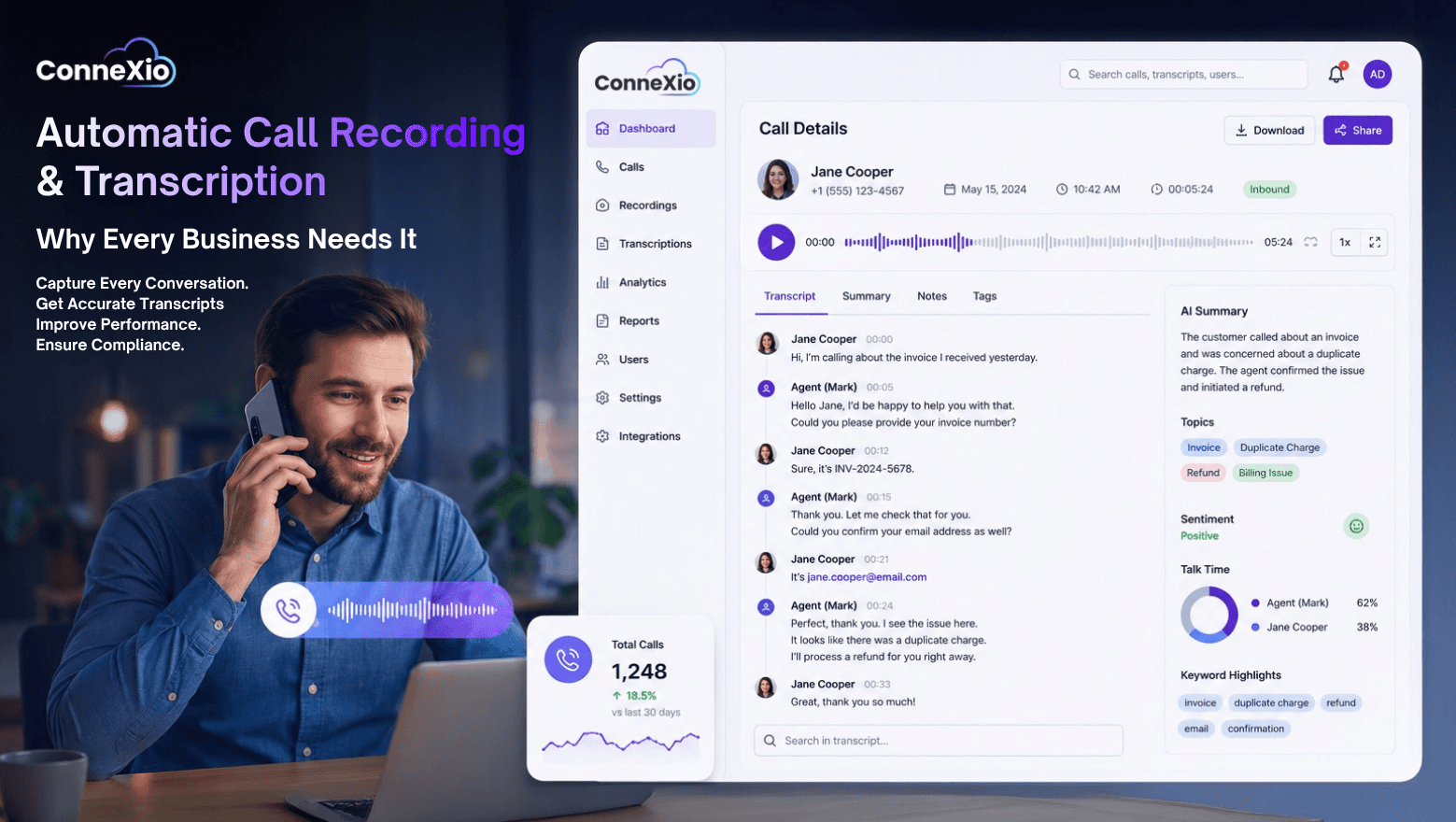
Call recording for training, compliance, or just keeping records
Video conferencing built into the same platform
SMS and messaging from your business number
CRM integrations so every call gets logged automatically
More advanced systems like ConneXio Cloud also include AI-powered features like real-time call transcription, sentiment analysis, and intelligent call routing that learns which agent handles which type of call best.
Do You Need Special Equipment?
Not necessarily. Most modern VoIP services are softphone based, meaning you download an app on your computer or mobile device and start calling. No desk phone required.
If you want physical desk phones, most VoIP providers support standard IP phones that plug into your existing ethernet connection. These cost anywhere from $50 to $300 depending on the model.
The only real technical requirement is a stable internet connection. A standard broadband connection handles VoIP calls with no issues. Each active call uses roughly 100 kbps of bandwidth, so a 100 Mbps connection can comfortably handle hundreds of simultaneous calls.
Is VoIP Reliable?
This is the most common concern for businesses considering a switch. The short answer is yes, modern VoIP is highly reliable, but the quality of your internet connection matters.
If you have a stable broadband connection and a decent router, call quality on VoIP is typically as good as or better than a traditional phone line. Most business-grade VoIP providers offer 99.99% uptime guarantees backed by redundant data centers.
For businesses that need maximum reliability, a backup internet connection (like a 4G/5G failover) gives you peace of mind that calls never drop even if your primary connection goes down.
How Much Does VoIP Actually Cost for a Small Business?
Costs vary by provider and plan, but here is a realistic picture for a small team of 10 people:
Basic VoIP plan: $15 to $25 per user per month, so $150 to $250 total
Mid-range plan with advanced features: $25 to $40 per user, so $250 to $400 total
Full unified communications with AI features: $40 to $60 per user, so $400 to $600 total
Compare that to a traditional phone system where 10 lines might cost $500 to $1,000 per month before any additional features.
Most businesses that switch to VoIP see 40 to 60 percent savings on their phone bills within the first year.
How Do You Switch to VoIP?
The process is simpler than most people expect:
Choose a VoIP provider that fits your team size and needs
Sign up and create your account online
Download the app or set up your IP phones
Port your existing business phone number (most providers handle this for free)
Start making calls
The whole process typically takes a few days. Number porting is usually the longest part and takes 5 to 10 business days depending on your current provider.
Is VoIP Right for Your Business?
VoIP makes sense for almost every small business in 2026. The technology is mature, the savings are real, and the features you get are significantly better than what traditional phone lines offer.
If your team works from multiple locations, works remotely, or just wants to stop overpaying for a basic phone system, VoIP is worth a serious look.
The question is no longer whether to switch to VoIP. For most small businesses, the question is which VoIP provider fits your workflow best.
ConneXio Cloud offers a full unified communications platform built for growing businesses. Voice, video, SMS, CRM, and AI in one place. No long-term contracts.
🗓️
☎️
💬
All-in-one-Solutions!
Dialer, Omni-Channel Tools, CRM, Workforce Management, Real Time Analytics And More...
Comperation
Related Posts
Tips, product updates, and insights to help you get more out of ConneXio Cloud